Base 10 Blocks
Math Manipulative
ETA/Cuisenaire
The Base 10 Blocks are essentially an extension of the Cuisenaire rods idea. Available in unit cubes, ten rods, hundred flats, and thousand cubes, the Base 10 blocks are sized so that ten units will fit in the same space as a ten rod, ten ten rods will cover a hundred flat, and ten hundred flats will stack into the size of a thousand cube. Thus, they provide a hands-on way to understand and visualize the denary (i.e. base 10) number system.
In order to match the Cuisenaire rods that we already use, I ordered unit cubes in natural wood (the closest color to white), and the ten rods in orange.
I have made my own cards to go with these blocks (see picture), based on an idea in Natural Structure by Edward and Nancy Walsh. Using blank 3x5 index cards, I made cards reflecting the value of each place in the decimal system from units to thousands. Thousands are written on the full-width cards, hundreds on 3/4-width, tens on half-width, and units on 1/4-width cards. The child can match the cards to the manipulatives, and then combine them to form the number.
At first, we use the cards to simply identify the value of large numbers. Then, we add numbers together and see how this can "make" new tens. This has been the most difficult step for us. It seems that once they get this concept, extending it to the higher place values is relatively simple.
We have found the Base 10 blocks helpful in clarifying place value concepts.
Showing posts with label reviews. Show all posts
Showing posts with label reviews. Show all posts
Saturday, May 30, 2009

Tuesday, May 5, 2009
Review: Cuisenaire Rods
 Math Manipulative from ETA/Cuisenaire
When I first researched homeschooling products and resources, I spent quite some time looking at different math manipulatives. For one thing, there are so many, and for another, I love math. I remember wondering whether these colored rods would really be worth purchasing, as they are on the expensive side. And my math education, as far as I could remember, had been accomplished without a single manipulative.
Then I found Miquon Math, and immediately liked the concept. Miquon uses Cuisenaire rods as their primary manipulative, so with some trepidation, I acquired a starter set.
I needn't have worried. The rods made math so much easier for my very concrete, hands-on son to grasp. That was almost a decade ago, and now my youngest enjoys doing his math with the rods.
The concept behind the rods is simple. Each rod color is a specific length, representing a particular number of units. White rods are "units" 1cm long, reds are twice as long and represent the number 2, and so forth. A starter set comes with several of each rod from 1-10, with more of the smaller rods.
The child then uses the rods in combination to visualize basic math concepts. Perhaps it is obvious that addition can be modeled using such rods, simply by putting them end to end in a "train." However, they can also be used for subtraction, multiplication, and division, and even fractions, areas, and more. Using the Cuisenaire rods, quite young children can understand what multiplication means and can work out simple problems.
We actually own a lot of math manipulatives, including both store-bought and homemade ones, but these are the ones I use the most.
Cross-posted with love2learn.net.
Friday, May 1, 2009
Review: My First Number Book
 My First Number Book
by Marie Heinst
1999, 48 pages, hardcover, DK Publishing
This delightful picture book introduces many math concepts to preschoolers. We have enjoyed working through concepts of counting, matching, sorting, sets, and sequencing. The illustrated pages make it fun for my son to discover more, less, and equal, addition and subtraction, geometric solids, and more. For example, matching begins with familiar matching pairs such as handprints, shoes, and earrings. Ideas of more or less begin to take shape as the child ponders such questions as, "Are there enough collars for the puppies?"
Sometimes your child may surprise you with an unexpected answer; for example, on a page showing five puppies and three doghouses, my son confidently assured me that "each puppy can have its own house." When I asked him how, he said, "The puppies that are brothers share a house." To him, sharing was not incompatible with the idea of being its "own" house.
The book also includes a few games. My son's favorite is a simple game involving counting backward or forward according to the roll of the die and directions on specific spaces.
Numbers are incorporated into the book in other clever ways; for example, each page number is illustrated by a string of the appropriate number of items. See if your child notices. Near the end is a section of BIG numbers, which all my children have enjoyed.
This book does an unusually good job of combining attractive photographs with effective questions designed to lead the child to discover math concepts.
I think it is currently out of print, but it's not hard to find at used book sources.
Cross-posted with love2learn.net
Saturday, February 21, 2009
Quick Review: Unveiled Hope
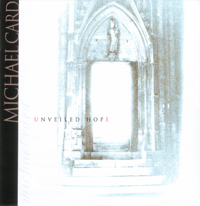 by Michael Card
CD, Sony, 1997
I heard a single song from this CD several times on our local Catholic radio station and was hooked. I loved the joy and hope, and the promise of God's ultimate victory. It has been particularly helpful and uplifting to me during difficult times.
Based on the book of Revelation, this CD is suprisingly "Catholic" in its content. The "Holy, Holy, Holy" track reminded me of the connection between the Mass and the heavenly liturgy. Each member of my family has a different favorite among these songs, which feature a variety of musical styles.
This is my favorite Michael Card CD.
Friday, February 13, 2009
Review: How To Win the Culture War
 A Christian Battle Plan for a Society in Crisis
by Peter Kreeft
Inter-Varsity Press, 2002, softcover, 120 pages
We are at war. No, not Iraq or Afghanistan. I'm talking about a much longer, more profoundly dangerous war. One whose victims number not in the thousands but in the millions. It is the war between the culture of Life and the culture of Death, also known as the Culture War.
That is the war this book is about.
I first read this book when it came out several uears ago; I re-read it a few weeks ago, and realized that I have matured as a Christian in the intervening period. The answers that struck me as not practical back then, I now realize to be eminently so. Grounded as they are in ultimate realities, they are far more real -- and practical -- than any tome chock-full of "TO DO" lists.
As Dr. Kreeft says in the Introduction,
"To win any war, ... the nine most necessary things to know are the following:This book is Kreeft's attempt to provide us with at least this information. In writing it, he does not pull any punches. He readily admits that some will be offended. Yet, if this is so, it is because some are not willing to accept the truth. It may not warm our hearts to hear that our culture is dying, but knowing the truth is a vital first step to overcoming the culture of death.
- that you are at war
- who your enemy is
- what kind of war you are in
- what the basic principle of this kind of war is
- what the enemy's strategy is
- where the main battlefield is
- what weapon will defeat the enemy
- how to acquire this weapon
- why you will win
We live in a time of confusion, in which basics realities are disregard and many seem to have simply given up exercising their power of reason and handing their minds over to whoever entertains them best. For example, consider who are the real enemies in the culture war. No, it's not liberals, or secularists, or Moslems, or indeed any group of human beings. Stumped? The book reminds us that, as the catechisms say, the real enemies are sin and the devil.
Again, what of the enemy's strategy? It is brilliant in its simplicity: attack the foundations of society -- the family, life, and reason. In two impressive chapters, we see the connection between all the attacks, and learn the methods, thereby also learning how to counter them. Specifically, he shows how the sexual revolution was the primary route to our cultural demise and remains the primary battlefield. Indeed, he argues that "we cannot win the culture war unless we win the sex war, because sex has become the effective religion of our culture." Pope John Paul II's theology of the body can help us mount the counter-revolution.
I enjoyed Kreeft's use of satirical wit to skewer many a foolish notion, and indeed to show us just how ridiculous are some of the ideas we take for granted. This little book should go a long way to clearing away the accumulated errors and replacing them with good, healthy dose of Truth.
If you are interested in defeating the culture of death and building a culture of life, I highly recommend this book.
A shorter, earlier version of this essay with only 3 main points may be found in the EWTN library.
Wednesday, February 11, 2009
Review: St. Patrick's Summer
 A Children's Adventure Catechism
by Marigold Hunt, illustrated by Theodore Schluenderfritz
Softcover, Sophia Institute Press, 2005, 288 pages
ISBN: 192883292
I recently read St. Patrick's Summer aloud to my children. They absolutely loved it! Frequently, they begged for "just a little more," and I enjoyed it so much that I often obliged.
The set-up: Michael and Cecelia need help preparing for their First Holy Communions, but Mrs. Murphy, their teacher, is at her wits' end. She says their questions would stump a bishop. So she asks St. Patrick to help and he does so in a most unusual way: by appearing to the children, showing them events from the past, and answering their questions.
As we read, I was delighted to discover:
- explanations that really make sense to kids -- and adults
- Michael and Cecelia are hilariously true-to-life
- the saints are wonderful characters, full of gentle humor and fun -- people I would love to have for my friends.
Reservations:
Because this book was originally written more than a half-century ago, the Catholic Church's view on a couple of items has developed since its writing. These points are:
- The fate of babies who die unbaptized (ch. 5, pp. 81-2) is presented as definitely lower than that of baptized infants. However, the CCC says (m. 1261):
As regards children who have died without Baptism, the Church can only entrust them to the mercy of God, as she does in her funeral rites for them. Indeed, the great mercy of God who desires that all men should be saved, and Jesus' tenderness toward children which caused him to say: "Let the children come to me, do not hinder them,"63 allow us to hope that there is a way of salvation for children who have died without Baptism. All the more urgent is the Church's call not to prevent little children coming to Christ through the gift of holy Baptism.
- In the story (also in ch. 5) St Patrick tells the children that the "Supernatural Life" that men from Adam to Jesus had access to was the same as the sanctifying grace of Baptism that we have access to in and through Christ. Whether faith in a future Messiah by those who lived before Christ's passion and death resulted in the same sort of grace as that which results from Baptism now is not clear, and a very difficult matter to understand. To treat it as if it were answered in such a simple fashion is to distort the truth. Such an assertion does not belong in a children's book; it's at best a source of great confusion and could well be false. Thanks to Maria Rioux for helping me clarify my concerns on this point.
I'd recommend this book as a highly enjoyable religion supplement for children in approximately grades 3-7, although all ages will enjoy it as a read-aloud.
Cross-posted with love2learn.net
Friday, February 6, 2009
Review: Desperation Dinners
 This is my favorite cookbook! Most cookbooks are too involved for me, but not this one.
The sub-head reads: "Home-cooked meals for frantic families in 20 minutes flat." Well, there are very few times I can actually manage it in 20 minutes. It seems that someone (usually someone small) always needs a little assistance just when Mom is getting dinner together. Or perhaps I am just slow. Nevertheless, most nights I can have the entree prepared in around 30 minutes. Not bad, considering that my "pre-Desperation" meals, with the exception of pasta with red sauce from a jar, usually ran 45 minutes to an hour. Or more.
The basic concept is simple: the authors have taken a variety of recipes and pared them down to simplify and speed up preparation. For example, they use products such as bottled minced garlic or bottled ginger rather than fresh. However, they do stick to products that still convey a decent flavor. The other key is the word "meanwhile": the recipes nearly universally call for the chef to be doing something while a part of the meal is cooking and does not need direct attention.
I do tweak the recipes a little to fit our family, for example upping the spice or seasoning level on some dishes, using brown rice cooked in my rice cooker rather than the "instant" type they call for, and using canned tomato sauce rather than stewed tomatoes to suit the "chunk-free" preferences of certain family members. One adjustment I have had to make on most recipes is increasing the quantities. Maybe we are just hearty eaters, but I find that their recipes that "serve 6 generously" are too small for our family of 5.
With a variety of recipes from soups and stews to meatloaf, pasta, and pizza, most of us will be able to find a good selection of foods our families like. Sections at the end cover sides, salad dressings, and desserts. I haven't made many of these, but our standard salad dressing has become the balsamic vinaigrette from this cookbook.
Meals made from Desperation Dinners recipes appear regularly at our table, as do other recipes that I have adjusted to suit the "Desperate" style of cooking.
Monday, January 26, 2009
Review: Evangelium Vitae / The Gospel of Life
 Full of truth and light, this 1995 encyclical letter of Pope John Paul the Great is essential reading for all who desire a civilization of life and love. By calling evil by its true name, the Holy Father gives us the power to overcome it.
It was in Evangelium Vitae (The Gospel of Life) that Pope John Paul coined the terms "culture of death" and "culture of life" that have since become common parlance. He explains:
we are facing an enormous and dramatic clash between good and evil, death and life, the "culture of death" and the "culture of life". We find ourselves not only "faced with" but necessarily "in the midst of" this conflict: we are all involved and we all share in it, with the inescapable responsibility of choosing to be unconditionally pro-life. (n. 28)Among the many valuable insights that the Holy Father offers are the following:
- The culture of death is that which offers death as a "solution" to societal problems. It is like "curing" illness by killing the patient.
- God did not make death ... Death came into the world as a result of the devil's envy (n. 7)
- The culture of death "is actively fostered by powerful cultural, economic and political currents which encourage an idea of society excessively concerned with efficiency." In other words, instead of focussing on each human being as a person made in God's image, the focus becomes what can this person do -- the value of his life becomes dependent on his ability to do something.
- There exists a tremendous contradiction between the solemn affirmation of human rights on the one hand, and the practical attacks against the fundamental right to life in the very same societies.
- Among the roots of this contradiction are subjectivity, a false notion of individual freedom opposed to proper solidarity, and secularism.
- "the heart of the tragedy being experienced by modern man [is] the eclipse of the sense of God and of man ... when the sense of God is lost, there is also a tendency to lose the sense of man, of his dignity and his life" (n. 21)
It is from the blood of Christ that all draw the strength to commit themselves to promoting life. It is precisely this blood that is the most powerful source of hope, indeed it is the foundation of the absolute certitude that in God's plan life will be victorious. ...Finally, he calls every Christian to work for the culture of life:
In effect, signs which point to this victory are not lacking in our societies and cultures, strongly marked though they are by the "culture of death". (n. 25-26)
To be actively pro-life is to contribute to the renewal of society through the promotion of the common good. It is impossible to further the common good without acknowledging and defending the right to life, upon which all the other inalienable rights of individuals are founded and from which they develop. A society lacks solid foundations when, on the one hand, it asserts values such as the dignity of the person, justice and peace, but then, on the other hand, radically acts to the contrary by allowing or tolerating a variety of ways in which human life is devalued and violated, especially where it is weak or marginalized. Only respect for life can be the foundation and guarantee of the most precious and essential goods of society, such as democracy and peace.The battle lines are drawn. Which side will we choose?
There can be no true democracy without a recognition of every person's dignity and without respect for his or her rights.
Nor can there be true peace unless life is defended and promoted. (n. 101)
Subscribe to:
Posts (Atom)